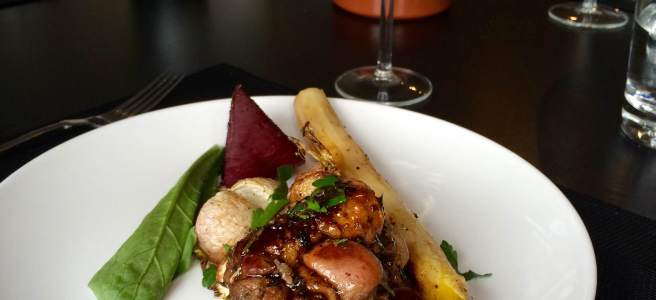
39. What if WE ate like this?

A Summary of the Shared Meal in ACTS

Eating together, sharing food, inviting any who would come, and using those meals to testify to the life, death, resurrection, and saving grace of Jesus was a common theme throughout the earliest days of the nascent church. What would it look like if we “did” meals the same way?

Most importantly, our tables would no longer be empty, instead reclaiming a rightful place as the central gathering place in our homes, and standing as a visible testament to the importance of shared meals in the life of believers. In our homes, we would not only participate in regular family meals, we would create a new habit- a practice if you will- of intentionally inviting others to join us- people from church, our neighbors, our work colleagues, our children’s friends and their families, visiting missionaries and scholars, and even the stranger we just happen to meet on any given day. Food could be simple fare like bread, soup, cheese and a piece of fruit- anything that would stretch to serve a tableful of guests and family, and be easy to prepare. And every table would always be capable of accommodating “just one more” hungry person.

Such a meal would begin with praise and thanksgiving. Today, we might call this “saying grace”. After the meal proper, invited guests would be asked to bring a word, a letter from a missionary might be shared, and Scripture read. A hymn would be sung. There would be prayer. And these types of meals would happen over and over again throughout the year.

At church, we would gather frequently to share meals and we would be intentional about inviting anyone in the neighborhood to join in. And, just like our home-based meals, the shared meal at church would contain specific components of praise, thanksgiving, breaking of bread, testimony, Word, and prayer, a model we’ll consider later in this book.

As a reminder, these posts are numbered in a specific sequence because they each contain pieces of the chapters of a book on shared meals and Christians.  So, they are meant to be read IN ORDER.  If you have comments or questions, send them via the LEAVE a REPLY box provided.  I am more than happy to discuss the topic with you!

~Julie A.P. Walton, Ph.D.

38. Lamenting a Lost Practice

Every Sabbath morning at the start of worship, my pastor invites us to the meeting. He makes it clear that our presence for fellowship and worship and praise is the intersection where we, the gathered, meet with one another, God the Father, and Jesus the risen Christ in the counsel and care of the Holy Spirit. As a result, I have come to embrace the notion that the congregation of believers- those who congregate for an encounter with God and for his glory- does, truly comprise a meeting.

Likewise, I think the earliest believers, despite all their ethnic, cultural, and religious diversity, viewed their shared meals together as a meeting, (i.e., as worship) and I like to imagine that they looked forward to these regular meals with great anticipation and joy. This is why I also think of their gatherings as meal-meetings, or what I also like to call fellowship meals, because I also believe the common shared meals and the meetings of the early Church were inextricably connected, not necessarily to the extent of actually being Greco-Roman meal-symposiums, but of at least having evolved out of that prototype.

Of course our worship today, particularly on the Sabbath, is much different, crafted around centuries-old liturgies, creeds and doctrines, not to mention overt cultural-sensitivity to people’s lack of time for multiple meetings in a week. Thus, compared to those first Christians, our worship is much more formal, and our meeting together for shared meals far, far less common. And, it is this general loss of the shared meal- in families and church families alike- that I believe is something to lament because the places at our dining tables are so consistently and symbolically empty.

Our tables are empty because we no longer view a shared meal as a fundamental way to also share the gospel, and because we are unwilling to share our lives in such intimate, selfless, and demanding ways as hosts, who take, thank, break, and give bread to others. But most of all, we should grieve because we are so distracted, and always, always in such a hurry to be doing something else. As I wrote at the start of this chapter, regularly breaking and eating bread together is a practice meant to make us think of Jesus, to recognize his presence at our meal fellowship, and to remember his incomprehensibly great love for us. Our determined failure to practice shared meals on a regular basis should make us stop and think about why we no longer eat together and what we’ve lost in the process.

~ Julie A.P. Walton, Ph.D.

Please make comments in the LEAVE A REPLY box, and contact me if you need further information about using this text for a small group or Sunday School study, or as the theme for a weekend retreat.

37. Radical Hospitality is RISKY

Recall that a special hallmark of the Greco-Roman banquet was that invitations were sent ahead of time to request a guest’s presence. The early Christian meal-meetings, on the other hand, took place in believer’s homes, and appear to have been open to any who had been baptized as believers as well as those who claimed to believe. Moreover, following Jesus’ teachings, the meals would have been evangelistic in nature in that they would also have been open to the maligned and risky fringes of society.

So, now we not only have Jew and Gentile together at a fellowship meal, but men and women, slave and free, educated and illiterate, the economically advantaged side by side with the poorest of the poor. The heterogeneity of the people at this kind of meal, or gathering, would have been a radical occurrence in that day. Actually, if you think about it, it would be a radical occurrence in our time too.

Radical hospitality is risky. It involves the kind of love that sent Jesus from heaven as a fully human being and set his face toward the cross. It’s the kind of love that denies the fear of the rhetorical ‘what ifs’ with sincere determination that Jesus’ love for ‘the least of these’ is the life to which all believers are called. In the end, radical love accepts the likelihood that others will take advantage of the generosity and servant-heart of those willing to empty themselves of pride, fear, and security.

Apparently, this was no different in the early church, because the writings of both Peter and Jude address a form of Gnosticism evident in the lives and actions of some who claimed to be believers (2 Pet 2:13 and Jude 12). Both authors mention the immoral behavior of some at the “love feasts”, or agape meals of the early Christian communities.   Gnostics believed that the sinfulness of their behavior, particularly their sexual proclivities, was “covered” by their salvation through Christ. In other words, they used their salvation as a kind of ‘get out of jail free’ card to justify their ongoing lustful immorality.

Try to imagine, if you will, the meal-meetings of the early believers. Given the heterogeneity of the participants, it is not hard to envision that some of those present were, in their ‘former’ lives, accustomed to attending meals followed by an evening of drinking, entertainment, and revelry, including sexual escapades. Others, still Jews by self-description, would hold to a habit of meals in which ceremonial purity rituals were still adhered to. Still others could be in attendance even though they were not believers at all, perhaps joining in for a free meal, or to find out what The Way was really all about. “In such a socially porous environment it would not be hard for false teachers claiming to be Christians to slip in and freeload, and cause trouble… Christianity was an evangelistic religion, and so this meant risk for the Christian community because they were open to having guests and strangers attend their meetings.”[1]

These are ingredients for a very interesting, even disastrous meal indeed, and the warnings from Peter and Jude would have us understand that the revelers may have gained an upper hand as false teachers. Still, the premise of the fellowship meals was to share the love and fellowship of Christ in ways that were edifying and promoted the virtues of a Christian life. There was, and always will be inherent tension and risk involved here. While we are called to “expel the immoral brother” from our fellowship (1 Cor 5:13), and “with such a man do not even eat,” (1 Cor 5:11), we are also to be open and inviting even to the worst of sinners. The distinction revolves around one’s claims to be a believer, baptized and filled with the Holy Spirit. If such a one continues in sin despite loving confrontation and counsel from believers, that one is to be excluded from the fellowship to the point that we not even eat together. It should not, however, ever prevent us from inviting the unbeliever to our fellowship or our meals.

In Post 38, we will look at the hard truth: our tables are too often empty.

~Julie A.P. Walton, Ph.D.

[1] Ben Witherington III, Making a Meal of It (Waco, Texas: Baylor University Press, 2007), p.89.

36. For Heaven’s Sake!

To the Romans, Paul wrote,

“One man’s faith allows him to eat everything, but another man whose faith is weak eats only vegetables. The man who eats everything must not look down on him who does not, and the man who does not eat everything must not condemn the man who does, For God has accepted him (Rom 14:2-3). “For the kingdom of God is not a matter of eating and drinking, but of righteousness, peace and joy in the Holy Spirit, because anyone who serves Christ in this way is pleasing to God and approved by men. Let us therefore make every effort to do what leads to peace and to mutual edification. Do not destroy the work of God for the sake of food. All food is clean, but it is wrong for a man to eat anything that causes someone else to stumble (Rom. 14:17-21).”

Paul here addresses the schisms that arise when any one believer or group of believers makes demands of the entire congregation based on personal preference or historic tradition. For the Jewish Christian, it was anathema to eat meat sacrificed to foreign gods, meat often sold for public consumption in the city and town markets. To them, this meat was unclean. The Gentile Christians didn’t really care, to them meat was meat, and the origin of the meat they purchased did not concern them. Here we have one group, so obsessed with where the meat comes from (again related to their misguided notions regarding ritual purity) that they resort to eating no meat at all, whereas another faction just digs right in and eats it all.

Under these circumstances, the early Christians eating a meal prior to a meeting for praise, worship, testimony and prayer would find the meal itself so upsetting that they’d literally enter the post-meal fellowship with the gall of their disagreements stuck in their craw. And so we have Paul begging them to try harder to put the food nonsense behind them once and for all. We may scoff at the rigidity of some of the early believers, and the “whatever” attitude of others, but we encounter the same attitudes in church today when, for example, we disdain vegetarianism or the need for a gluten-free Eucharist without trying to understand the issues (to name just two). Paul is clear: we are commanded to put aside our personal preferences for the joy and mutual edification of the entire congregation of believers, and reconcile our differences because breaking bread in peace creates an atmosphere in which we can praise, worship, learn, and be sent in peace.

In Post 37, we tackle another hard topic: the risk of being open to any who would come.

~Julie A.P. Walton, Ph.D.

A reminder: these posts are meant to be read in order, as together they make up an entire book on the shared meal.  Send comments using the LEAVE A COMMENT box provided.  This topic is an excellent one for adult Sunday School classes or weekend retreats.  Please let me know if you’d like me to help you.

35. Food Fight!

Paul was a major player in confronting early Christians about their need to set aside personal and heated differences over their food practices of the past to enjoy fellowship meals of mutual edification and submissive accord. A careful read of Paul’s letters to the Romans, Corinthians and Galatians clearly shows that some of the biggest divisions among early believers were sparked by radically different food customs and practices at the meals of the gathered community. Try to imagine the consternation of the Jewish Christian eating with a Gentile Christian. The Jew would be upset by the so-called unclean practices of the Gentile. The Gentile, not caring to adopt the ball and chain of the Jewish purity rituals would also be made to feel inferior for eating certain foods, in particular the meat from animals sacrificed to idols. Paul worked tirelessly to get all believers on the same page where sharing food was concerned; his letters, most certainly circulated and read at the shared meals of the early Christians, are filled with admonitions that they stop their petty bickering over food and the separatist notions these disputes fostered.

In his letter to the Galatians Paul wrote, “When Peter came to Antioch, I opposed him to his face, because he was clearly in the wrong. Before certain men came from James, he used to eat with the Gentiles. But when they arrived, he began to draw back and separate himself from the Gentiles because he was afraid of those who belonged to the circumcision group” (Gal 2:11-12). Apparently, Peter’s conviviality with Gentiles was met by separatist Christian Judaizers with such disapproval that he had begun to withdraw from meals at which Gentile Christians were present. Paul insists that it is not the Gentile Christians who must act more “Jewish” but the Jewish Christians who must live like Gentiles, and he publicly calls Peter to account for his legalistic behavior. Accusing Peter and the Galatians of being brainwashed, Paul instructs them to justify their actions solely on Christ, and resume their shared meals together, because “the table was a prime and powerful image in Paul’s world for boundary marking and community inclusion.”[1] Paul scolds Peter for succumbing to the pressures of some Jewish Christians who were still following the Jewish requirements for ritual purity. Imagine the irony if you can. This is the same Paul who once bragged of his righteous keeping of the law, and the same Peter who was with Jesus when he condemned the Pharisees for the blind way they assumed ritual purity was counted to them as righteousness. It is no wonder Paul confronts Peter to his face.

In post 36, we will continue this discussion!

~Julie A.P. Walton, Ph.D.

Click on LIKE and SHARE within the blog!  And feel free to contact me with comment/questions using the LEAVE A REPLY box provided.

[1] Dennis E. Smith, From Symposium to Eucharist, p. 186.

34. Worship & the Shared Meal

“They broke bread in their homes and ate together with glad and sincere hearts, praising God and enjoying the favor of all people” (Acts 2:46-47). Luke distinctly tells us that they met together in their homes for meals, and that these meal-meetings included corporate praise. So it seems possible that “church” – the early practice of corporate prayer, worship, and the breaking of bread- occurred at these shared meals. Today, many scholars believe the shared fellowship meal was most certainly the primary venue for  the reading of circulating letters or in-person visits from itinerant apostles like Paul, Peter, and John.

“A primary way first-century “Christians” spent time together was at meals.  There they made decisions together about their inner workings and their  relationship to the broader world. Meals were the place where they taught and learned together and where they worshipped, prayed, and sang their songs together. This was the time that they had arguments, sorted out differences, went their own ways, and reconciled with one another. It was a central community event. These meals provided the primary experiential evidence for those who opposed them, those who dropped in for visits, and those who were curious about them.”[1]

These meals fostered fellowship and community and most likely served as a major factor in the development of both early Christian identity and its spread. If you recall from Chapter Five that the shared meal of the Roman era was on the order of the Hellenistic pattern of greeting, meal, and symposium, then it’s not hard to imagine these early Christians meeting together in one another’s homes and dining rooms, as any newly formed club or guild would quite naturally do.   Christians would greet each other with a kiss, offer water for washing of hands and feet, break bread during a common meal while reclining on couches, share the cup of wine, then participate in any number of postprandial activities such as singing, praise, teaching, testimony, preaching, discussion and prayer. Such meals would create not only a sense of community (koinonia), but of friendship (philia), and grace (charis).[2] In other words, the shared meal was very likely a critically formative practice giving rise to a new social and religious identity known simply as The Way.

This is especially important to note, because the gospel was for all people, not just the Jews. So, these meals brought together quite disparate groups of people not heretofore affiliated with one another. “Given the diversity that came to characterize Christian groups at a very early stage of development, how could a sense of cohesion have developed so easily? How could individuals from diverse ethnic, religious, and social backgrounds come to call one another “brothers and sisters”? …The most likely locus for this development is the community meal, with its unparalleled power to define social boundaries and create social bonding.”[3]

In the next post, #35, we will begin to ask why so many NT letters address food disagreements in the early Church.  And, like a simple meal, please SHARE this post!

~ Julie A.P. Walton, Ph.D.

[1] Hal Taussig, In the Beginning was the Meal: Social Experimentaion and Early Christian Identity (Minneapolis: Fortress Press, 2009), p. 21.

[2] Taussig, p. 27.

[3] Dennis E. Smith, From Symposium to Eucharist, p.184.

33. Glad Hearts Eat Together!

In the first chapters of the book of Acts, Luke picks up exactly where he left off in his gospel, reviewing Jesus’ last moments on earth eating with and teaching the disciples before ascending to heaven. The disciples, now referred to as apostles by Luke, return to Jerusalem after Jesus’ ascension to wait for the promised baptism by the Spirit. They spend the next fifty days praying with believers (in Acts 1:15 Luke says there were about one hundred and twenty gathered), until the day of Pentecost. From this point onward, the fellowship of baptized believers grows under the preaching of Peter and the apostles.

“They devoted themselves to the apostles’ teaching and to the fellowship, to the breaking of bread and to prayer. Everyone was filled with awe, and many wonders and miraculous signs were done by the apostles. All the believers were together and had everything in common. Selling their possessions and goods, they gave to anyone as he had need. Every day they continued to meet together in the temple courts. They broke bread in their homes and ate together with glad and sincere hearts, praising God and enjoying the favor of all people. And the Lord added to their number daily those who were being saved” (Acts 2:42-47).

This passage in Acts 2 contains several important clues about how “church” may have operated in those earliest days. Obviously, there were no church buildings or church staff, no pews, fellowship hall, or Sunday school rooms for the first Christians, and no trained clergy, except possibly for converted Pharisees and scribes with a schooled understanding of the law. There was no set liturgy, no New Testament gospels or letters yet written, nor any prayer books or hymnals to use. In other words, the early church had no formal infrastructure, and no real recognizable identity through a set, much less standardized set of Christian practices across the Roman Empire.

From a sociologic and historic perspective, nascent social undertakings often rely heavily on the infrastructure already present in society at large. For example, when we plant a new church today, it is common to meet in an existing school or office building otherwise empty on Sundays. Likewise, when a new belief system is born, it will often be imbued with elements of the culture out of which it emerges, and Christianity, born in Jerusalem during Roman occupation in the Hellenistic era is no different.

We know from Scripture that these earliest Christians met together on a consistent basis. In Jesus’ day there were two main ways people regularly met together, at the temples (Jewish or pagan), and at meals. In other words, worshipping together and sharing meals were common social practices of that era. Peter and the apostles prayed at the temple and taught in the temple courts where Jewish religious teaching in Jerusalem had always been done, until this became increasingly difficult because of the opposition of Jewish leaders. This leaves the shared meal as the one standing social practice by which early Christians could meet together in small groups.

We should ask ourselves why we don’t do the same.

~Julie A.P. Walton, Ph.D.

32. Jesus Lives-to Eat Again!

Post #31 finished up this book’s chapter about the meals of Jesus during his earthly life.  In this next chapter, we shift our focus to the meals  (and food fights!) of the first Christians.

Luke ends his gospel with two fascinating scenes. First, two of Jesus’ followers, having walked with a unrecognizable Jesus along the road to Emmaus, invite him to stop and share a meal. Again, Jesus steps in to act as host by taking the bread, blessing it, breaking it, and giving it to the other two, who immediately recognize this “stranger” as the risen Jesus. This act, of taking, thanking, breaking and giving bread is the same thing Jesus did when he fed the 5,000, and again at his Last Supper. It’s a repeated practice at meals designed to sear into our minds that Jesus is always with us as host, provider, and savior. In other words, regularly breaking and eating bread together is a practice meant to make us think of Jesus, to recognize his presence at our meal fellowship, and to remember his incomprehensibly great love for us.

The Emmaus scene ends with the two followers running back to Jerusalem to report to the eleven disciples that Jesus lives, and that they didn’t recognize him until he broke the bread. And, as the thirteen of them excitedly replay the story amongst themselves, Jesus suddenly appears right in their midst. The disciples, already on an emotional roller coaster are terrified (after all, it is still Sunday, less than twenty four hours since the empty tomb was discovered). So Jesus shows them his pierced hands and feet to try and calm their fears, and then asks, “Do you have anything here to eat?” (Luke 24:36-41).

Here stands the risen Christ alive, in the flesh, asking for something to eat, because the first thing he wants is to celebrate with them in table fellowship! This is Jesus’ way of convincing them he’s not a ghost, and this turns their fear into joy. In accepting and eating a piece of broiled fish, Jesus, who until now had always assumed the role of host at meals, accepts the hospitality of the disciples. First bread at Emmaus, then fish in Jerusalem- this is an echo of Jesus’ shared meal on a remote hillside when he commanded the disciples, “You give them something to eat.” (Luke 9:13)

Jesus leaves us with a model for our own meal ministry; Jesus will always be present at our meals, asking if we have anything to eat, and expecting us to be host to the itinerant, hungry, fearful, and doubting people in our world. By sharing a simple meal at our table, we break bread with others so that they too might recognize Jesus.

Next time, in Post 33, we will begin to scour Acts for clues about the meals of the early Church.

~Julie A.P. Walton, Ph.D.

(Featured image: emmaus-art-3.jpg from http://heartofgaemmaus.org)

29. Meals for Prodigals

Luke records several parables in chapter 15 about the lost condition of sinners and the redemption available following repentance. These culminate in the parable of the prodigal son, where Jesus describes a famously wayward son who returns home hungry after squandering his inheritance. By rights, his father need not take him back. But, this father has been watching for his son’s return, and sets in motion a grand feast to celebrate the son’s reinstatement in the family.

Here is a feast to note. When a lost loved one returns home with a changed heart, when s/he seeks forgiveness, our natural response should be one of joyful celebration through feasting. It’s a recurring theme throughout the meal stories in the Gospel of Luke; repentance, reconciliation, and redemption are available to all. Our place at God’s table is waiting for our change of heart, which is the catalyst leading to a reformed and responsive life, reenergized by eating the spiritual food Jesus provides.

Not long after preaching the “lost” parables, and getting closer to his last days in Jerusalem, Jesus finds himself in Jericho, peering up into a sycamore tree at Zacchaeus, the town’s chief tax collector. Looking him in the eyes, Jesus doesn’t bother asking Zacchaeus what he wants. Instead, Jesus tells Zacchaeus that he plans on staying at his house. One minute Zacchaeus is “lost” among the tree’s leaves, and the next he is jumping down with rejoicing. Immediately, another meal with “sinners” is in the works. It must have been a very happy meal indeed, marked by a festive welcome unlike any Jesus had experienced in the homes of the Pharisees.

Just imagine:  Jesus coming up to you and asking you to set a place at your dining room table for him!  What’s the menu?  Who else would you invite?  What would the table conversation be like?  Believe it or not, the day is coming when you WILL be seated at the wedding feast table with Jesus the bridegroom. Jesus the lamb of God.  The bread of life.  The Lord of your life.  Wow!  Jesus welcomes you, the prodigal, you, the sinner, with open arms, and the first order of business is a shared meal!

18. The Day Jesus Needed Tampons

Allow me to share a true story, one that dramatically changed how I think about the shared meal. I was at a conference in Seattle in June, about a year after starting to research the Christian practice of the shared meal. On this particular night a colleague and I headed down to the wharf to get some fish and fries. While getting on line at the outdoor fish stand, we were approached by a homeless woman for money for feminine products. A colleague replied,

“No.”

But, I was intrigued by the woman’s request because it had never once occurred to me how a homeless woman would manage such a monthly (and expensive) need. This woman was relatively young, maybe in her early thirties. One of her front teeth was chipped, and her skin showed obvious signs of vitamin deficiency, likely related to alcohol abuse. Not wanting to give her money for alcohol, I instead said,

“Well, let’s go to the drugstore and I will buy you what you need.”

The woman immediately argued that it was thirteen blocks to the nearest drugstore, and she’d just take the money. So I looked her right in the eyes and said,

“No, I am sorry. I can’t give you any money.”

She swore at me and walked away, and I found myself asking to her back,

“Wait a minute! Are you hungry?”

The woman stopped in her tracks, turned back toward me with a question on her face (my colleague did too), and I said,

“I am getting some fish and fries for supper. Do you want some supper?”

She eyed me with a suspicious hope and I managed to hold her gaze. Wrinkling up her forehead she said,

“Well, can I have a Coke too?”

I replied, “Sure. You can have fish and fries and a Coke, same as I am having.”

She came toward me then, and touched my arm with her filthy, scaly hands, and I all but recoiled from this physical contact that violated my “personal space”.[1] She quizzed me again,

“Can I have the biggest Coke they got?”

“Sure, the biggest Coke you can get”, I said.

By now we were next in line. I told her to go ahead and order, while informing the vendor that her order was on me. With great flourish and glee the woman ordered fish and fries and “the biggest Coke you got,” while ferociously tearing at the napkin dispenser to stuff napkins in her pocket. As I stepped up to make my order and pay, she turned to me, put her reeking arm around my shoulder and said,

“Lady, you made my day. You made my whole month. Thank you.”

And she skipped down the line to fill her Coke cup. Her order came up, and she snatched at the sack of food wondering aloud if she could get some ketchup. I motioned to the tables overlooking the harbor where ketchup bottles stood ready for the diners, but she said,

“No, no, no. I need them little packets of ketchup. Lots of ‘em.”

So the vendor gave her a fistful of ketchup packs while I filled my drink, looking around for my colleague amongst the tables, and, I admit, consciously hoping this woman would be on her way. And that’s what happened- she bounded off with her food and drink and napkins and ketchup. My colleague commented that I was an easy target while I sat down congratulating myself that the situation had turned out so well. I went to bed that night content that God had placed a need in front of me and I had responded with kindness and generosity- I had loved my “neighbor” in an uncomfortable situation.

I was awakened by a voice around 2:00 a.m. I remember sitting up in the bed, frightened that someone had broken into the room. I confirmed that I was awake, not dreaming and then felt a shadow at the end of the bed. There was Someone in my room; Jesus was here, and I had nowhere to hide. But very gently, he repeated the question with which he’d awakened me,

“What was her name?”

“What? Whose name?”

And the Lord distinctly and forthrightly said,

“What was the name of the woman at the fish stand?”

Then he was gone. And my heart welled up with an overwhelming wretchedness. I had bought a hungry woman some food. But, even after more than a year of study on the Christian practice of the shared meal, I had failed to dignify the woman’s existence by asking her name, and inviting her to sit with me for supper. I had not once thought to pray with her or for her, to introduce her to the Jesus I know and love. I had helped a hungry person by sharing some money. But I had not shared a meal or had any serious conversation about God and his love with this distressed woman whose hunger was deep. That night I learned that while hunger comes in all shapes and sizes, and that non-judgmental love for the stranger is itself a hard and strange calling, we are called nonetheless to attend to the needs of those Jesus places in our path, even when it means sharing an evening meal at close quarters around a table with someone who suffers from addiction and needs a bath almost as badly as she needs Christ. I gave her a meal, but I neglected to tell her about the coming Feast.

I tell you this story because we all need to think about why our participation in Christian practices like the shared meal may take much practice. It is precisely through these shared practices Christians can “more fully…understand their shared life of response to God’s active presence in Christ and to embody God’s grace and love to others amid the complexities of contemporary life”[2] and how they can help us think “about how a way of life that is deeply responsive to God’s grace takes actual shape among human beings.”[3] What is even more important, the Seattle story unveils a truth about who is welcome at God’s Table. “Jesus intentionally ate with those at the margins…as an act of compassion but also of empowerment.”[4]

Shared meals afford us all these things: helping us understand our shared lives together, responding to God’s presence, embodying his grace, and recognizing and empowering the marginalized. Thus, the shared meal constitutes a critically important practice we should not ignore, because they provide a regular opportunity for becoming “deeply responsive” to God’s provision, nourishment, and grace. If you have been hungering for a change in the way you live your life, start at the table. Invite. Prepare. Provide. Sit. Eat. Relax. Converse. Listen. Invest in the other lives at the table. Pray together. Read Scripture. Forgive. Reconcile. Be forgiven. Laugh. Cry. Share. Live. And, God himself will be amongst you to confirm its rightness. It is time to clear your table of mail and projects and get started. And, the best place to start is with Jesus himself, and the meals he shared.

[1] I say “personal space” because it is a cultural norm in North America to be physically “distant” from strangers, giving us the “power” to decide who is invited into that space. The Pharisees of Jesus’ day weren’t any different-they kept the “unclean” away and criticized Jesus for doing the opposite. I admit to being a little germ-conscious, so hugs, and touching, and handshaking have always made me uncomfortable. You can ask my friend Joy, the hugger. After five years I can now hug her back with enthusiasm. These things take practice!

[2] Dorothy C. Bass, “Introduction,” in Practicing Theology: Beliefs and Practices in Christian Life, ed. Miroslav Volf and Dorothy C. Bass (Grand Rapids: Wm. B. Eerdmans, 2002), p. 7.

[3] Craig Dykstra and Dorothy C. Bass, “A Theological Understanding of Christian Practices,” in Practicing Theology: Beliefs and Practices in Christian Life, ed. Miroslav Volf and Dorothy C. Bass (Grand Rapids: Wm. B. Eerdmans, 2002), p. 15.

[4]Smith, G.T., A Holy Meal: The Lord’s Supper in the Life of the Church, p. 77.