44. Tricky Balance:Food Idolatry vs Quick, We Need to Eat!

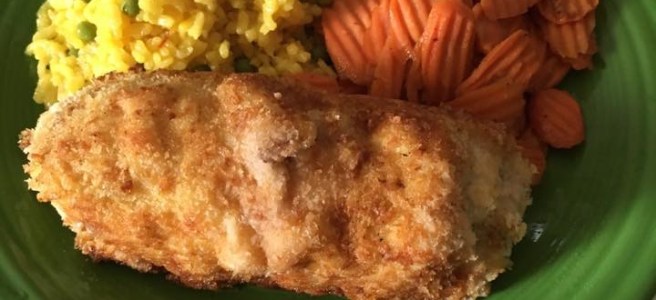
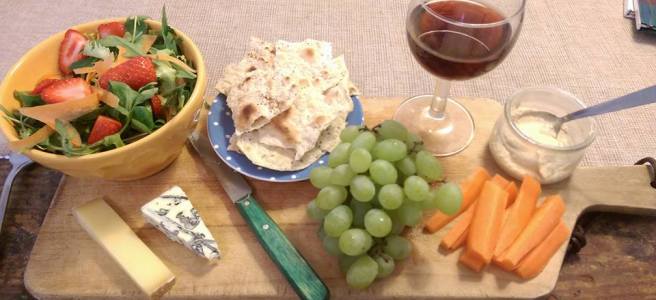
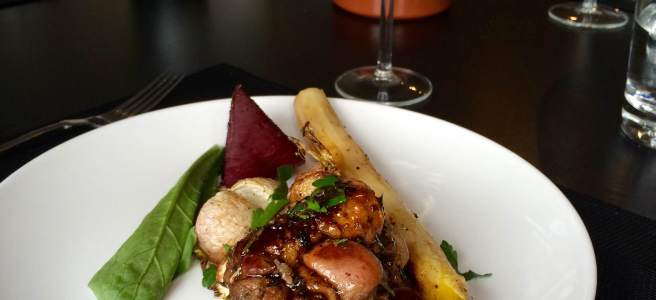
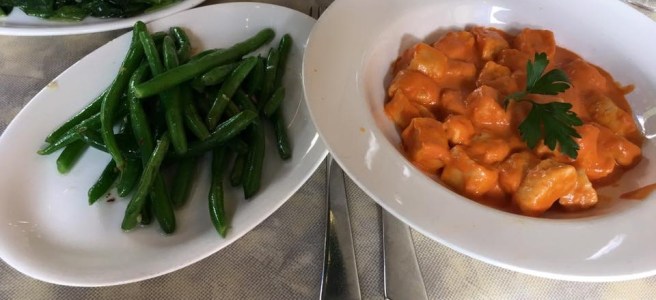
Actually, food preparation is an important concept to think about. We are currently experiencing a rash of new writings about food- what constitutes real food, why fast food threatens our health and way of life, why we should consider eating only locally grown foods, and why the planet cannot sustain food production for the anticipated population of nearly nine billion people worldwide by 2050. The latter chapters of this book attempt to address our individual connection and ease of access to food in the United States with issues of food and water scarcity in much of the rest of the world. For now, suffice it to say that our present national attention to food is, perhaps, overindulgent, and a fascinating study in human nature. On the one hand, we idolize food and nearly make food practice a religion. Food critics, cable cooking shows, and internet bloggers remind us that the world of food has its own language and rules, where food takes on godlike characteristics. On the other hand, such obsession-compulsion and misplaced fidelity is contradicted by a post-modern and relatively mainstream insistence that food be characterized, above all else, by convenience. We don’t have time to fuss over food, and we just want something to mollify our hunger. Somewhere in this dilemma, most of us find ourselves having to work very hard to find middle ground. We want to provide healthy food for ourselves and our families, and wish we could enjoy it together more often.

Unless you have hired help, procuring, storing, and preparing food is a necessity that someone in the home must meet on a consistent basis. Because nutritional needs across the age span can only be met by regular consumption of a variety of healthy foods, we need to understand the importance of the roles of planning menus, buying food, keeping ingredients on hand, and making time and space for preparing food in ways that are appetizing, wholesome, and, yes, even convenient. What’s more, most of us need to do this on a tight budget.

More often than not, this obligation falls to the adult women of a household, but more and more, men are taking an active role in a family’s food needs. One of my colleagues is a single father with two elementary school-aged daughters. The three of them have a routine for the four nightly meals they share each week. On Mondays after school, they go together to the grocery store. Each girl plans the menu for one meal and dad plans two. They walk and talk themselves through the store, picking out the ingredients they need for their planned meals. Once home, they work together in the kitchen to put foods away and begin the evening meal prep. It is not unusual for some of the girls’ friends to stay for a meal with this little family. Each meal begins with prayer, and dad intentionally guides the conversation around biblical stories and themes while having the girls replay the day’s events. My colleague says that this activity of planning, shopping for, making and sharing meals has bonded the three of them together like nothing else they do. In the process, the girls are learning to shop and compare prices, consider substitutes, store and prepare food, and entertain friends in their home over a shared meal.

No matter who sees to the food provision in your home, that person must be well-versed in the age-appropriate nutritional needs, within budgetary limits, of all of the family members being fed. And, if time is tight, it is a job that requires planning, discipline and creative thinking. In Post #45 we will begin to address where to start.

~Julie A.P. Walton, Ph.D.

Photo credit:  K. Luymes

43. Table or Trough? Does Your Family Dine or Feed?

Have you ever stopped to wonder if the shared meal is less about food and eating as it is about the time set aside (meaning sacred) for coming together? In this way, the shared meal sets us apart from the animals. Animals feed, eating whatever they find on their sorties, and as their appetite dictates. Humans, on the other hand, dine- a process of planned menu and shared dishes and, in families, companionship (com meaning with, pan meaning bread). When eating at home is degraded to each family member grabbing food whenever it suits them, we lose much of what it means to be both human and family.

For those with children still at home, you might, at this point, be tempted to say that although this all sounds great, it would never work in your family. Your table is messy and noisy, and people are distracted. Your mealtimes are more like boxing matches or a three-ring circus, with fights over food, over who sits where (or won’t stay seated at all), over who manipulates the conversation and hijacks attention. The hour is not settling but restless. I have a friend whose three children argued constantly over who got to sit in between both parents at their round table. With one more child than parent, it always turned out that at least two of the siblings had to sit next to one another each night without a parent on both sides. The poking wars, verbal as well as physical, were endless. I know of another family whose table was always in such constant motion that the mother began reading children’s adventure stories during the meal as a way to keep the children seated throughout the meal’s entirety.

Despite the chaos, it is good to remember that the table is probably the best place in the home for teaching children about respect, manners, and service and sensitivity to the needs of others. It is at the table we learn firsthand what it means to work for the common good. This helps fortify the notion that each child is indeed a member of the family, this tight little community called “us.” At the table a sense of belonging, of kinship is born and nurtured. Will there be times of conflict, of petulant teenage resentment, of childish behavior?   Most certainly. Just remember, there will also be times of shared joy where drama and comedy play out around the table every night as food is shared. If you want to build family, share the table.

There are, of course, other barriers to regularly sharing meals at home. Often, children are so hungry when they get home from school they fill up on snacks then aren’t hungry for dinner. For some children with attention disorders, medication has begun to wear off toward evening making this a frustrating time for parent and child alike.[1] What’s more, it is not unusual for a family with two or more children to have something scheduled for every night of the week. It is also typical for one adult in the family to bear the lion’s share of food-related acquisition and preparation; let’s face it, somebody has to be in charge of the food, a responsibility that is difficult to sustain in very busy families.

~ Julie A.P. Walton, Ph.D.

Are you NEW to Shared Table Blessings?  WELCOME!  I invite you to join a growing number of people interested in the importance of the shared meal amongst family, friends, and strangers. Each post is numbered that you may follow the book I have written about the Christian Practice of Shared Meals.  For the best understanding, start reading posts in order, and send comments or questions my way using the LEAVE A COMMENT box found at the bottom of every post.  ~JAPW

[1]Families with children with attention disorders may experience evening mealtime challenges related to both behavior and medication side effects like appetite suppression and insomnia. When the last dose occurs at noon, a behavioral rebound effect (in particular hyperactivity) around late afternoon is probable, and if a subsequent medication dose is taken, appetite for the evening meal will be blunted, and the child more likely to have trouble sleeping at bedtime. Sometimes, a lower dose at 4:00 p.m. is helpful. In these cases, it is often advisable to delay the evening meal so that appetite is less negatively affected. Working closely with a pediatrician is highly recommended.

42. The Dining Table: Food for Hungry Souls

The last post tried to demonstrate how a shared family meal is powerfully generative, with the power to produce, or generate a way of thinking, acting, and responding to circumstances. In particular, children learn from the adults at the table not only civilized table manners and social customs, but about life and death, good and evil, right and wrong. In short, the table is a place for a child to observe what it means to be an adult. For believers, this becomes even more significant, because this is our shared practice for learning what it means to be a man, woman, child, and family of God.

It is also deep mystery how shared table time as a routine practice helps children develop a healthy attitude toward ritual and tradition. It has a potent and lifelong carryover effect on their sense of family and belief, acting as a liturgy of sorts for creating that daily rhythm of how a flourishing family life should flow. And, in this day and age, when culture kidnaps our children at younger and younger ages, this table time protects them. The physical food they eat with us is a symbol of God’s ever-present provision, help and sustenance. This family table is the place we can teach our children what we know of God, and where they can watch us live that love out.

Over many years as a professor at a Christian college, I had students regularly tell me of their struggles to know God. They are so fraught with an urgency to seem grown up without really wanting just yet to actually grow up, that they tend to leave looking for God by the wayside as they try to find themselves. This is quite natural for that age, but they almost universally and wistfully wish they could balance school, work, friends, and faith better than they do. In nearly every situation, my best counsel to them was to become more familiar with who God is, and to study his attributes, his Word, his actions throughout the generations, his dying and undying love for them, and his unchangeable nature. For my students, so focused on mission, I point them toward God because they need a better-developed sense of co-mission as they train (this, too is practice) for a lifelong vocation.

What does that have to do with the family table? The table, with its rich undertones of grace, acceptance, sustenance and togetherness is where parents can use, no matter how brief, the stories of the day just ending to teach their children about God. Mary wasn’t much older than a child when Gabriel announced God’s favor upon her. In her song of response, Mary demonstrates a deep knowledge of and trust in God, exclaiming, “His mercy extends to those who fear him, from generation to generation. He has performed mighty deeds with his arm; he has scattered those who are proud in their inmost thoughts. He has brought down rulers from their thrones but has lifted up the humble. He has filled the hungry with good things but has sent the rich away empty. He has helped his servant Israel, remembering to be merciful to Abraham and his descendants forever, even as he said to our fathers.” (Luke 1:50-55)

Mary knows, fears, and reveres her God. It is nearly impossible to revere or fear a God you do not know well. When our knowledge and understanding of God is unformed, we are vulnerable to the human tendency to revere and fear the wrong things. When we revere money, we find ourselves fearing a fickle economy. If we revere health and youth, then illness, aging, even dying frighten us. Our reverence for providing for our own safety and security is born out of a fear of tragedy or calamity. But, at the table, we learn about a God who says throughout history, “Trust me, let peace rule in your heart. I care for you. I give you bread not stones. I love you so much and so completely that I died for you. I am here for you, present among you, and I will never leave you.”

The table truly does provide a powerful opportunity for testimony to our children. In our families, sharing our lives, our family history, our joys and our tears around the table, we also share in the love and knowledge of God. Our children not only learn the stories of our faith, they learn the stories of the family’s encounters with God through its history. We model for children what it means to trust God, to love him with a sincere and devoted heart out of fear and reverence for his holiness, his incarnation, his substitutionary death, and his promise to return. “Food is a direct route to the intimacies of life.”[1] This is food for hungry souls.

Think about planning some family meals this week-for everyone’s sake!

~Julie A.P. Walton, Ph.D.

[1] Weinstein, The Surprising Power of Family Meals, p. 69.

Featured image by J.Holberg, 2016

41. Be GENERATIVE. Sit. Eat. With. Your. Kids.

You must make it happen. There is NO OTHER WAY.  The evening family meal is restorative; it provides time, space, food, and companionship for soothing the rough patches created by the demands of both this day, and of the day anticipated tomorrow. It helps cement people together and organize the family as a team. Table time as a family is for discovery too. We share our experiences and the things we’ve learned, and can discuss whether our responses to particular situations were the right ones.

When our daughter began fourth grade at a new school she encountered her first bully. Week after week, we spent time as a family, almost always at the dinner table, discussing what the bully said today, how she acted on the bus, and what we, as a family should do about it. We prayed together. My husband and I advised our daughter to adopt a “kill the situation with kindness” attitude, but not because we wanted to teach her non-confrontation.[1] On the contrary, we felt that intentionally-responsive smiles and kind words on our daughter’s part comprised precisely the type of loving confrontation Jesus would have practiced. At first, our daughter’s responses only infuriated this bully to grander displays of meanness (all verbal), but, to give her credit, our daughter persevered and trusted that this decision, made as a family at the dinner table, was the right course of action. We also counseled our daughter to try her hardest to imagine what could make another little girl so angry and mean, and to pray for her to experience the joy of a changed heart. Was this bully unloved at home? Was she sad? Did she really just need a friend and not know, socially, how to make one? Our daughter prayed for this girl for many weeks. Eventually, the bullying stopped. Our daughter learned that responding in kind is never as good as responding with kindness. She learned that some people are unloved and unloving. She learned to pray for an enemy, and to ask for prayer. And, she learned that, as a family, we took her problem seriously and were concerned for the outcome. All in the intimacy of the family table.

This helps demonstrate how a shared family meal is powerfully generative, meaning that it has the power to produce, or generate a way of thinking, acting, and responding to circumstances. In particular, children learn from the adults at the table not only civilized table manners and social customs, but about life and death, good and evil, right and wrong. In short, the table is a place for a child to observe what it means to be an adult. For believers, this becomes even more significant, because this is our shared practice for learning what it means to be a man, woman, child, and family of God.

It is also deep mystery how shared table time as a routine practice helps children develop a healthy attitude toward ritual and tradition. It has a potent and lifelong carryover effect on their sense of family and belief, acting as a liturgy of sorts for creating that daily rhythm of how a flourishing family life should flow. And, in this day and age, when culture kidnaps our children at younger and younger ages, this table time protects them. The physical food they eat with us is a symbol of God’s ever-present provision, help and sustenance. This family table is the place we can teach our children what we know of God, and where they can watch us live that love out.

[1] This particular eight year-old girl was not a physical threat, nor did she act as part of a larger group of bullies picking on our daughter, and this happened before social networking made e-bullying a reality. This little girl was just miserably mean. One reason we monitored the situation so closely each night at the supper table was to discern if adult intervention was called for.  But, we also wanted our daughter to learn to positively handle life’s challenges on her own with God’s help and wisdom.

Until next time!

Julie A.P. Walton, Ph.D.

40. Family Supper-Are You Kidding Me???

With schools starting, this is a great time for us to start Chapter 6:Table Time at Home for Families in this blog book called Come Back to the Table: A Countercultural Call to the Christian Practice of Shared Meals.  Hopefully, the preceding chapters have convinced you that sharing meals, as a distinct Christian practice, should be an important part and pattern of your daily family life.  But, as any parent will tell you, mustering the family around a nightly meal can be a harrowing, energy-sucking experience. This may be particularly true for one-parent families, those in which both parents work full time outside the home or in homes with children with special needs. When I began working full time at our local hospital after years of being home all day while going to school at night, I was not prepared for the panicky rush that the dinner hour became. One of us had to eat and run back out for a meeting or school event. A child forgot to tell you on the way home that she needs a large neon-green poster board (no, the white one in the closet simply won’t do) for an ecology assignment that’s due tomorrow. Your spouse ate a big lunch out today with co-workers and isn’t hungry. Dirty breakfast dishes in the sink need clearing out before dinner preparations can begin. Lunchboxes need cleaning out. You forgot that the frozen ground beef you were counting on for tacos tonight got used up in last week’s meatloaf.  The dog is starving and needs to go out, and the laundry should be started before supper to ensure that the volleyball uniform is ready for tomorrow’s big game.

Is it any wonder that the shared meal becomes sacrificed to the tyranny of more pressing issues? Yet, for me and my family, dinner together around the family dining table remained a critically important activity, and we were determined to make it all work even after I began putting in 45-hour weeks at the hospital around the same time our daughter started middle school sports. This is because the table is where we build family. It is the one time each day we can each sit in a place we call “ours” and, for even twenty blessed minutes, know we are in this life together, and that God is at its center. Miriam Weinstein believes a family evening meal “sort of forces an environment when everyone has to stop and sit down. It creates a boundary when you’re sitting around a table. It’s a designated time. It focuses attention on what is going on here and now between the people around the table. It gives us a specific time to review our day”[1] together.

In our next post we will start to “dig in” to what this kind of family life can look like.

[1] Miriam Weinstein, The Surprising Power of Family Meals: How Eating Together Makes us Smarter, Stronger, Healthier, and Happier (Hanover, NH: Steerforth Press, 2005), p.74. Weinstein’s treatment of the challenges facing the regular family meal is excellent.

36. For Heaven’s Sake!

To the Romans, Paul wrote,

“One man’s faith allows him to eat everything, but another man whose faith is weak eats only vegetables. The man who eats everything must not look down on him who does not, and the man who does not eat everything must not condemn the man who does, For God has accepted him (Rom 14:2-3). “For the kingdom of God is not a matter of eating and drinking, but of righteousness, peace and joy in the Holy Spirit, because anyone who serves Christ in this way is pleasing to God and approved by men. Let us therefore make every effort to do what leads to peace and to mutual edification. Do not destroy the work of God for the sake of food. All food is clean, but it is wrong for a man to eat anything that causes someone else to stumble (Rom. 14:17-21).”

Paul here addresses the schisms that arise when any one believer or group of believers makes demands of the entire congregation based on personal preference or historic tradition. For the Jewish Christian, it was anathema to eat meat sacrificed to foreign gods, meat often sold for public consumption in the city and town markets. To them, this meat was unclean. The Gentile Christians didn’t really care, to them meat was meat, and the origin of the meat they purchased did not concern them. Here we have one group, so obsessed with where the meat comes from (again related to their misguided notions regarding ritual purity) that they resort to eating no meat at all, whereas another faction just digs right in and eats it all.

Under these circumstances, the early Christians eating a meal prior to a meeting for praise, worship, testimony and prayer would find the meal itself so upsetting that they’d literally enter the post-meal fellowship with the gall of their disagreements stuck in their craw. And so we have Paul begging them to try harder to put the food nonsense behind them once and for all. We may scoff at the rigidity of some of the early believers, and the “whatever” attitude of others, but we encounter the same attitudes in church today when, for example, we disdain vegetarianism or the need for a gluten-free Eucharist without trying to understand the issues (to name just two). Paul is clear: we are commanded to put aside our personal preferences for the joy and mutual edification of the entire congregation of believers, and reconcile our differences because breaking bread in peace creates an atmosphere in which we can praise, worship, learn, and be sent in peace.

In Post 37, we tackle another hard topic: the risk of being open to any who would come.

~Julie A.P. Walton, Ph.D.

A reminder: these posts are meant to be read in order, as together they make up an entire book on the shared meal.  Send comments using the LEAVE A COMMENT box provided.  This topic is an excellent one for adult Sunday School classes or weekend retreats.  Please let me know if you’d like me to help you.

35. Food Fight!

Paul was a major player in confronting early Christians about their need to set aside personal and heated differences over their food practices of the past to enjoy fellowship meals of mutual edification and submissive accord. A careful read of Paul’s letters to the Romans, Corinthians and Galatians clearly shows that some of the biggest divisions among early believers were sparked by radically different food customs and practices at the meals of the gathered community. Try to imagine the consternation of the Jewish Christian eating with a Gentile Christian. The Jew would be upset by the so-called unclean practices of the Gentile. The Gentile, not caring to adopt the ball and chain of the Jewish purity rituals would also be made to feel inferior for eating certain foods, in particular the meat from animals sacrificed to idols. Paul worked tirelessly to get all believers on the same page where sharing food was concerned; his letters, most certainly circulated and read at the shared meals of the early Christians, are filled with admonitions that they stop their petty bickering over food and the separatist notions these disputes fostered.

In his letter to the Galatians Paul wrote, “When Peter came to Antioch, I opposed him to his face, because he was clearly in the wrong. Before certain men came from James, he used to eat with the Gentiles. But when they arrived, he began to draw back and separate himself from the Gentiles because he was afraid of those who belonged to the circumcision group” (Gal 2:11-12). Apparently, Peter’s conviviality with Gentiles was met by separatist Christian Judaizers with such disapproval that he had begun to withdraw from meals at which Gentile Christians were present. Paul insists that it is not the Gentile Christians who must act more “Jewish” but the Jewish Christians who must live like Gentiles, and he publicly calls Peter to account for his legalistic behavior. Accusing Peter and the Galatians of being brainwashed, Paul instructs them to justify their actions solely on Christ, and resume their shared meals together, because “the table was a prime and powerful image in Paul’s world for boundary marking and community inclusion.”[1] Paul scolds Peter for succumbing to the pressures of some Jewish Christians who were still following the Jewish requirements for ritual purity. Imagine the irony if you can. This is the same Paul who once bragged of his righteous keeping of the law, and the same Peter who was with Jesus when he condemned the Pharisees for the blind way they assumed ritual purity was counted to them as righteousness. It is no wonder Paul confronts Peter to his face.

In post 36, we will continue this discussion!

~Julie A.P. Walton, Ph.D.

Click on LIKE and SHARE within the blog!  And feel free to contact me with comment/questions using the LEAVE A REPLY box provided.

[1] Dennis E. Smith, From Symposium to Eucharist, p. 186.

32. Jesus Lives-to Eat Again!

Post #31 finished up this book’s chapter about the meals of Jesus during his earthly life.  In this next chapter, we shift our focus to the meals  (and food fights!) of the first Christians.

Luke ends his gospel with two fascinating scenes. First, two of Jesus’ followers, having walked with a unrecognizable Jesus along the road to Emmaus, invite him to stop and share a meal. Again, Jesus steps in to act as host by taking the bread, blessing it, breaking it, and giving it to the other two, who immediately recognize this “stranger” as the risen Jesus. This act, of taking, thanking, breaking and giving bread is the same thing Jesus did when he fed the 5,000, and again at his Last Supper. It’s a repeated practice at meals designed to sear into our minds that Jesus is always with us as host, provider, and savior. In other words, regularly breaking and eating bread together is a practice meant to make us think of Jesus, to recognize his presence at our meal fellowship, and to remember his incomprehensibly great love for us.

The Emmaus scene ends with the two followers running back to Jerusalem to report to the eleven disciples that Jesus lives, and that they didn’t recognize him until he broke the bread. And, as the thirteen of them excitedly replay the story amongst themselves, Jesus suddenly appears right in their midst. The disciples, already on an emotional roller coaster are terrified (after all, it is still Sunday, less than twenty four hours since the empty tomb was discovered). So Jesus shows them his pierced hands and feet to try and calm their fears, and then asks, “Do you have anything here to eat?” (Luke 24:36-41).

Here stands the risen Christ alive, in the flesh, asking for something to eat, because the first thing he wants is to celebrate with them in table fellowship! This is Jesus’ way of convincing them he’s not a ghost, and this turns their fear into joy. In accepting and eating a piece of broiled fish, Jesus, who until now had always assumed the role of host at meals, accepts the hospitality of the disciples. First bread at Emmaus, then fish in Jerusalem- this is an echo of Jesus’ shared meal on a remote hillside when he commanded the disciples, “You give them something to eat.” (Luke 9:13)

Jesus leaves us with a model for our own meal ministry; Jesus will always be present at our meals, asking if we have anything to eat, and expecting us to be host to the itinerant, hungry, fearful, and doubting people in our world. By sharing a simple meal at our table, we break bread with others so that they too might recognize Jesus.

Next time, in Post 33, we will begin to scour Acts for clues about the meals of the early Church.

~Julie A.P. Walton, Ph.D.

(Featured image: emmaus-art-3.jpg from http://heartofgaemmaus.org)

28. Your Table MINISTRY

Not surprisingly, this latest meal (see post 27) infuriates the Pharisees and teachers of the law to the point that they begin to organize a hostile opposition to Jesus. Likewise, Jesus escalates his attacks in Luke 12 and 13, publicly warning followers about the hypocrisy and murderous intent of the Jewish leadership. Jesus speaks with urgency of a coming day in which there will be a great feast in the kingdom of God, and exhorts people to humbly repent and be faithful.

Not long after this, Jesus attends a Sabbath meal at the home of a prominent Pharisee. For the Jews, the Sabbath was a feast day, so this is no ordinary meal. “Whereas Jesus was explicitly invited to the earlier meals, now, although an invitation may be implied, none is narrated, as Jesus merely “went into the house”” (Luke 14:1).[1] Can you imagine the scene? These leaders have been plotting to permanently incapacitate Jesus’ growing influence amongst the Jews, and here he is, on a Sabbath no less, showing up uninvited for dinner and playing, supposedly, right into their scheme.

Luke leaves out details of the meal and proceeds straight to the events of the after-meal symposium/discussion. Knowing that the Pharisees and lawyers are watching him carefully, Jesus looks up to find a man with dropsy[2] standing in front of him. It is hard to think otherwise that this is a setup, especially because this unclean man appears in front of Jesus in the center part of the dining room reserved for the activities of the symposium, rather than at his feet where bystanders were tolerated. By way of providing a controversy for the after-dinner symposium, the host may have deliberately encouraged the man with dropsy to go stand in front of Jesus in hopes Jesus would dare to heal on the Sabbath.

In ancient times, dropsy was thought to result from a habitual overindulgence in food and alcohol, in other words, of uncontrolled appetite.  Luke implies a connection here between the physical greed of the sick man and the moral greed of the diners, portraying Jesus as the medium for healing in both cases. First Jesus heals the man with dropsy while arguing that anyone would rescue even an imperiled ox or donkey on the Sabbath. And, if that’s the case, why should saving a man be any different?   Interestingly, after Jesus heals the man and sends him away, the other diners uncharacteristically refrain from comment. Either they are sullen or bewildered by Jesus’ authority or both.

Again, Jesus uses a meal to teach about salvation as he masterfully takes advantage of the others’ silence to introduce his own after-dinner controversy (which implies he usurps the host’s authority). He directly challenges the way these men jockeyed for positions of honor at the table at the start of the meal, confronting the moral greed which compels a person preoccupied with status to manipulate others for the sake of social standing. Moreover, Jesus challenges the host to rethink his typical invitation list, urging him to invite people on the margins of society instead of his elite, status-seeking, self-righteous peers. Jesus teaches them that the great banquet in the kingdom of God will include people in desperate need of healing, those who are poor, crippled, blind and lame (Luke 14:21). What his dining companions fail to understand is that they themselves are “the spiritually poor-with nothing to offer for [their] salvation; the spiritually crippled-made powerless by sin; the spiritually blind-unable to see the truth about Jesus; [and] the spiritually lame-unable to come to God on [their] own.”[3]

These are lessons taught and learned at the table that should make us consider what we believe, and how we lead our own lives as a result of that belief. In a sense, our meals and our behavior at meals reflect what we believe, especially about Christian community and hospitality, as well as our attitude toward people on the fringes of society. The truth is, when we invite others to our table, we usually do so with the mindset of entertaining them rather than sharing the food of the gospel and its power to transform lives. We are hesitant to embrace total strangers at our family table, finding ourselves far more comfortable including only people we know well, and who happen to be a lot like us.

Perhaps it’s time to view our table as an active place for ministry. Do you know people who seem unable to come to God, blinded to his truth, or determined to save themselves all by themselves? Invite them over for a meal and watch God work!

~ Julie A.P. Walton, Ph.D.

[1] John Paul Heil, The Meal Scenes in Luke Acts: An Audience-Oriented Approach, p. 99.

[2] Today, we’d call this edema, or generalized swelling of tissues related to a host of causes, including heart and renal failure, liver disease related to abuse of alcohol, sodium retention, and abnormal blood pressure. For example, women with breast cancer who have lymph nodes removed often suffer from lymphedema, a significant swelling of the arm related to fluid obstruction in the lymphatic pathway.

[3] Tim Chester, A Meal with Jesus: Discovering Grace, Community, and Mission around the Table, p. 79.

26. Self-Absorbed Hospitality

Not long after the feeding of the thousands, Jesus and his disciples arrive at the home of the sisters Mary and Martha (Luke 10:38-42). Martha is clearly the one who invites Jesus into her home. As any host might, Martha undertakes the preparations, possibly for a meeting, but more likely for a meal. But, she makes the mistake many of us make; she overdoes the menu, fussing over the preparations to such a degree that she is unable to attend to the conversation of her guests. As a result, she is not fully present to Jesus and her resentment towards her sister, Mary, who is listening at Jesus’ feet, builds and festers.

Our meal hospitality too easily goes awry when undertaken with the wrong motives. True hospitality should function to unite people, and should be guest-focused. But, Martha is divisive and self-absorbed when she interrupts Jesus by entreating him to make Mary get up and help. Selfish hospitality is always about the host. “See how beautiful I’ve made my home. See what wonderful dishes I’ve prepared for you to enjoy. See how hard I’ve worked to get everything ready. See how good I am, and how much you should thank me, and how well you should think of me.”

Martha is worried and agitated by her attempts to provide the best possible experience for her guests. Jesus gently reprimands Martha for missing what Mary has discovered: there is only one thing necessary, and that is to sit at God’s feet and listen. This is the best food, the choicest portion. Recall that in Jesus’ day, the highest-status diners were often given the best portion. So, while Mary feasts, Martha chokes because of a prideful inability to deny herself the desire that her service be publicly noticed and lauded.

The lessons for us are threefold:

  • First, simplicity is the wisest path: we must not let grand motives undermine our full participation in and enjoyment of the meal process, because discipleship at the feet of Jesus requires our active presence.
  • Second, even when we invite others into our home for a meal, Jesus is the true host.
  • Lastly, our meal hospitality must be centered on the guest(s) and their interaction with the gospel of Jesus Christ; we must never selfishly divert attention away from Christ to ourselves.

A Personal Note: With summer nearly here, and an urgent need to watch over an ailing parent, I am scaling back these posts to 1x/week until autumn.  Please keep reading!  If you have fallen behind, each post is numbered, so you can start back where you left off.  With several hundred followers of the blog, we are reaching a wonderful threshold for discipleship across our individual churches!  PLEASE SHARE with your own church friends and family.

Thank you!

~Julie A.P. Walton, Ph.D.

Featured image:  Google Images, aliuf6.jpg