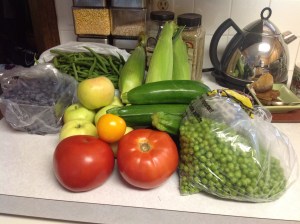
12. Is There Food on Your Table?

In Acts 2:42, we are told about the first believers:  “They devoted themselves to the apostles’ teaching and to the fellowship, to the breaking of bread and to prayer… All the believers were together and had everything in common (v. 44)… They broke bread in their homes and ate together with glad and sincere hearts, praising God and enjoying the favor of all people.” (v. 46-47)

A study of the communal meal practice of the first century church reveals a radically different model from our present-day attitudes toward shared meals.[1]  Why did their shared meal practices disappear over time, and why, today, do our foodways and mealways look so different?  A foodway is an accepted term that describes the habits and practices of food consumption and production in a cultural, social, or economic context, and shows us “how societies construct notions of self and community.” [2],[3]

The North American approach to food has shifted most dramatically in the past forty years, and seems absurdly paradoxical even for Christians because our foodways swing between two poles, one of apathy and ignorance, the other of obsessive and compulsive control. We now have 24-7 cooking shows on television, yet very few of us actually cook anymore.  We say we have no time to eat, but most of us are overweight, a symptom of eating too much too often.  Time is scarce, while cheap (and unhealthy) food is overabundant.  We spend millions of dollars each year on dieting (i.e. we spend more in an attempt to eat less).  Some of us overdo, while others do nothing; some of us are indifferent to our health and healthcare, while others’ anxiety about their health creates fanatical control issues.  Most people shun regular exercise while others spend far too many self-absorbed hours in the gym. We either become overly fastidious about the quality of our food sources, or we consume vast amounts of processed foods we know are not good for us.  (As one example, boxed cereal, a highly processed food, once promoted as just one part of a healthy breakfast, has become the default nighttime ‘meal’ when we are short on time, energy, or creativity.)  Our dining and kitchen tables are repositories for mail and school papers rather than places for a shared meal.

Since the dawn of time, people have been hunters, gatherers, farmers and shepherds.  Today we are much more disconnected from understanding how food reaches our tables.  At home and at church, we take pride in our manicured lawns and landscaping, but rarely consider using the church property to grow food for others with no land.  It seems that we are hungry, but not for food, and that Christians in particular need to think and pray about their own selected foodways and mealways.

Thoughtfulness can go a long way to help us find a healthy middle ground where food and meals are concerned.

“To grow food and eat in a way that is mindful of God is to collaborate with God’s own primordial sharing of life in the sharing of food with each other.  It is to participate in forms of life and frameworks of meaning that have their root and orientation in God’s caring ways with creation… Food is about the relationships that join us to the earth, fellow creatures, loved ones and guests, and ultimately God.  How we eat testifies to whether we value the creatures we live with and depend upon… When our eating is mindful, we celebrate the goodness of  [all creation has to offer], and…acknowledge and honor God as the giver of every good and perfect gift.”[4]   In other words, we must relearn what it means to care about, and care for all creation, including ourselves.

Perhaps even more importantly, our inattention to meals and cooking means we have stopped teaching our children about foodways and meal practices (mealways).[5]  In my experiential nutrition class a few years ago, I handed a bunch of fresh carrots from the farmers’ market to a student to peel.  I can still see him standing at the sink, carrots in hand, exclaiming with confusion that these could not possibly be carrots, because in his world all carrots were the size of one’s pinky finger and had no peel or green leafy tops.

Fortunately, young people are beginning to show a resurgent interest in healthy (and just) ways to grow, prepare, and share food!

[1] A subsequent chapter discusses the meal practices of the early Church in detail.

[2] Angel F. Mendez-Montoya, The Theology of Food: Eating and the Eucharist (Chichester, UK: Wiley-Blackwell, 2012), p.6.

[3] I have coined the term “mealway” to describe the general habits and practices surrounding how a society or culture consumes meals.

[4] Norman Wirzba, Food and Faith: A Theology of Eating (New York, New York: Cambridge University Press, 2011), p. xiii, 4

[5] This is a critically important point, as we will see.  Much is learned in the kitchen and around the table that actually has little to nothing to do with food.

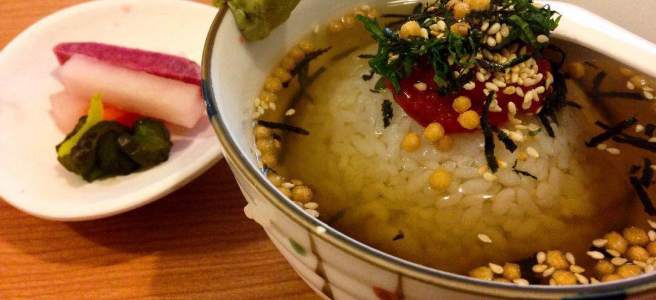
11. What ARE You Sharing with Others?

Instead of moving into the next chapter on the shared meal, I thought it might be a good time for DESSERT: to REVIEW the notion and nature of the Christian practices, and give you some discussion questions to think and pray through.

Christians are in training, actively practicing particular behaviors that lead to a mature faith and Christlike attitude.  Training takes intention-we need to plan it into our hours and days.  It takes submission, obedience, and sacrifice.  More than anything else, our training takes time.  When our life is already too crowded with a full schedule, we must learn to discern where and how our time is being misspent-as individuals and as a family.  We don’t “make time” for the disciplines and practices; only God makes time.  Instead, we shift our attitude and priorities.  We whittle down here, plan better there.  But mostly, we give our time to the Lord and ask him to help us use our waking hours in ways that honor him.

We have seen how our individual attention to the spiritual disciplines and our shared participation in the Christian practices forms us in our faith into the holy living to which we are called.  They strengthen us to live in a world that is not our final home, to share Christ’s gospel with joy, and to serve God and neighbor out of a delighted obedience.  This is a humbling yet energizing way to live one’s life in sacrifice, thanksgiving, and hope.  Not a life that is all about “me” but one that is focused intentionally on the believing community of “we”.

The early Church that formed out of persecution and dispersal in the first century was marked by the things believers had and did in common.  In our hyper-individualized society, it is difficult for us to comprehend the necessity and power of such communal or shared practices.  Those historic Christian practices formed the essence of our shared practices today, particularly those of worship, prayer, and Holy Communion.  Still, other practices, like that of the shared meal among believers, are no longer a regular part of our life in common.

DISCUSSION QUESTIONS

  1. The thesis of this chapter is that growing in your Christian faith requires sustained practice. List here some individual spiritual disciplines you do now to grow in your faith.  What do you like about each one?  What makes it hard to do them consistently?  What discipline do you NOT do now that you would like to incorporate into your daily walk?  Why?
  1. Discuss the nature of the spiritual disciplines and the Christian practices. How are they alike?  How are they different?
  1. Life often goes too fast, and we begin to feel as if we are running aimlessly on a treadmill going nowhere. How can attention to the disciplines and practices give you a new sense of purpose and direction and peace?
  1. If your life is simply too crazy-busy, take some moments to ask why. List here those things that take up most of your day/week.  Is there anything you and/or your family consistently do that could be put aside?  Done differently?  Ask yourself what you do, then ask yourself what you want, and consider how these answers differ.
  1. Have you ever given much thought to the shared Christian practices? Why is it important that you and your children are present in corporate activities like worship, prayer, Holy Communion, testimony, and confession-forgiveness-reconciliation?  What does it mean if you are routinely absent from these practices (either mentally or in your physical presence)?
  1. The next chapter will discuss the notion and nature of the shared meal as a distinctly Christian practice. Jot down your week’s typical meal patterns/schedule and with whom they are shared.

Please share your thoughts-it helps me as I continue to write the back chapters of this book to get a sense of what you think, what you do vs. what you wish for.  Thanks! You can click on SHARE to send to friends, and write in the Leave a Comment box below.  

~Julie A.P. Walton, Ph.D.

(featured image credit:  High Tea in China.  K.Richardson. 2016)

10. The MEAT of a Christian Practice

In the last post, I introduced the idea that our customs are not the same thing as a practice, and promised to sketch out the common elements of a Christian practice.

Let’s start with the idea of customs.  As an example, meal customs are informative.  Why did Jesus recline at meals?  Why did the Jews wash their feet before entering the dining area?  Why did Jesus tell the story of the man who threw a banquet for friends who were no-shows?  As we will see in subsequent posts, the meals that Jesus attended were shaped by the influences of Greece and Rome, as well as Jewish tradition, and, as a result, diners’ behaviors were circumscribed by particular customs.  A fundamental question for us is how did Jesus’ first followers move from those religiously and socially-traditional meals into the practice of the first century church in which shared meals were an integral part of the worship experience?

If a Christian practice is an activity that is regular, shared with other believers, and designed to strengthen our common life together as Christians, then it might be helpful to try and sketch out what I believe are the common elements of a Christian practice on our way to showing how the shared meal qualifies as such a practice.

As noted, there are several distinct Christian practices which we do together in Christian community, including worship, prayer, fasting, Sabbath-keeping, stewardship, the Lord’s Supper, forgiveness, and, as I claim, the shared meal.  The common elements of these Christian practices are invitation, provision, gratitude, nourishment, and formation.

God invites us into a particular practice whether it is worship or prayer or a shared meal.  We are invited to enter the practice by entering into God’s and one another’s presence, entering into rest and restoration, and entering into community and communion with God and one another.  Thus, there is always a kind of prologue to each practice, in which we mindfully enter into the practice by divine invitation to do so.  From the perspective of a shared meal, we accept God’s invitation to take time out to eat and share and rest together at table and in God’s presence.

There is an element of mutually beneficial provision in each of the practices.  We are individually and corporately provided for with charitable care and concern out of God’s grace and abundance, paradoxically finding in each practice an opportunity to serve as a way of providing for others.  We commit to praying for others, we fast together in lament and petition for a particular provision, and, when we worship and share in the sacred meal of Holy Communion, we realize God’ provision for our own life through Jesus’s life, death, resurrection and coming consummation.  Moreover, we learn, with grace and humility, to accept others’ service to us despite our ever-undeserving state.  Most importantly, God provides this time that we may to set it aside for Himself, others, and for our in-common well-being.

Each of the Christian practices contains the attribute of gratitude.  There is nothing we practice together which does not raise up an unquenchable desire to thank God as the source of all things good, and praise him for being our Creator, Savior, Counselor and King.  When we share a meal, we say grace before eating because we are so grateful for God’s ongoing presence in and provision for our lives, and for the food before us that will fuel our service to the kingdom.

The Christian practices nourish us by both feeding and satisfying our physical, emotional, and spiritual hungers to the point that we, in turn, are energized and able to serve God and neighbor.  We often enter into a particular practice with a mindset that there must be “something in it for me.”  The reality, as is often the case in our Christian walk, is that God intends the practice to show his glory, and create in us as the body of Christ the deep love and sacrificial posture we need to love him and serve our neighbor.

Lastly, the Christian practices all share the element of formation.  The profoundly formative nature of the practices is nearly beyond comprehension.  The practices introduce us to the kingdom of God, then reinforce and direct our discipleship.  We begin to grasp that all the Christian practices are inter-related, and that the more we practice them simultaneously in community, the stronger the weave of our life in common together.  To put it another way, the practices of the first Christians give us a firm anchor in how to live out our common lives (Acts 2:44).  Moreover, the practices act as a compass to direct us-in Christian community– along a path of growth and maturity in our faith, what we often call our ongoing development in Christlikeness.  It is the daily practice of our shared prayer, worship, meals, Sabbath-keeping, and forgiveness that leads, over time, to human flourishing- for ourselves and those we serve- to God’s glory.

Finally, then, we can ask if, in the lives of Christians, the shared meal is simply a custom handed down from earlier generations, or if Christians should view it from a faith perspective as a Christian practice.  It has always been a universal custom for people to eat together, no matter what their belief systems entailed.  As far as family and church family are concerned, it seems to me that we treat the shared meal as custom, easily shaped by the culture and the times, when it may actually be meant to be approached as a central communal practice in the Christian home and in the Church.  The shared meal, like other Christian practices, embedded with invitation, provision, gratitude, nourishment, and formation has the deep potential to fortify and direct our individual and common lives in ways that might surprise us.  So, it is to the notion of shared meals as faith practice we wll turn next time.

Thanks for sharing this space!  We are steadily moving into the MEAT of the shared meal as Christian practice!  There is a button below to :LEAVE A COMMENT.  I would appreciate hearing what you think.

~ Julie A.P. Walton, Ph.D.

(Featured image photo credit:  K.Richardson. 2016)